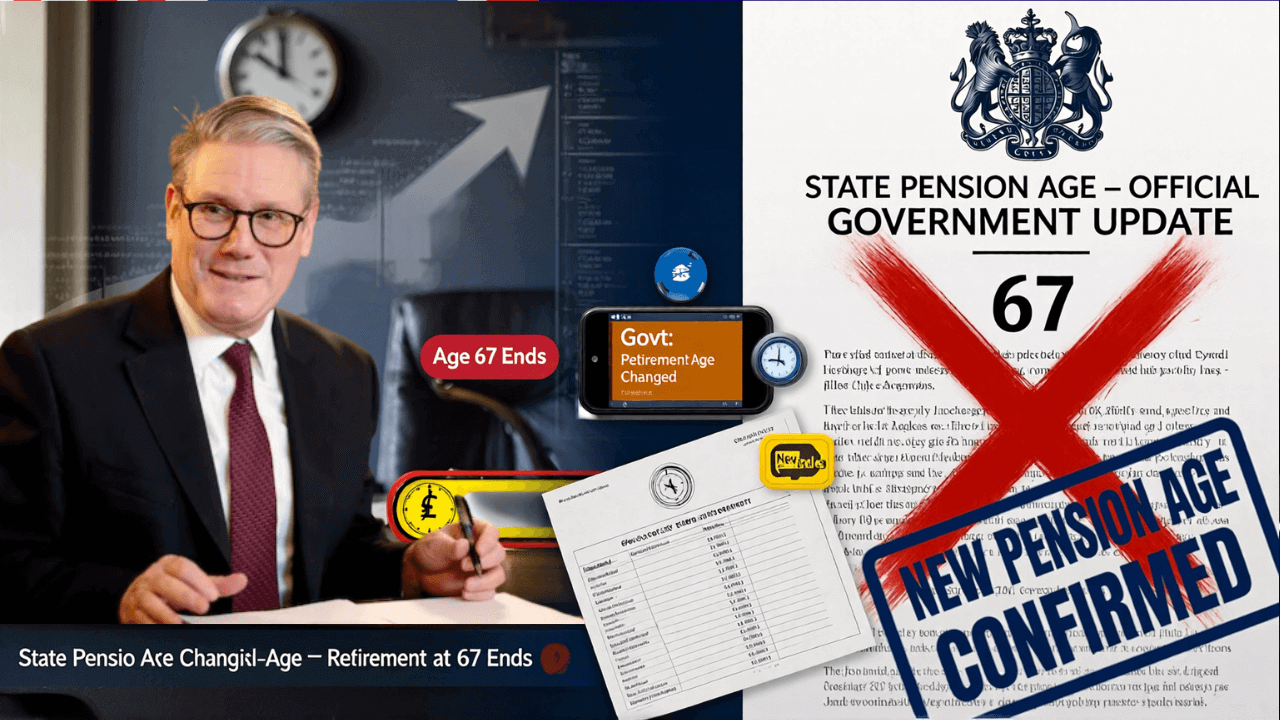
For decades, the idea of retiring at 65 — and later 67 — felt like a fixed promise for millions of UK workers. You worked hard, paid National Insurance, and eventually the State Pension would kick in at a clear, predictable age. But that certainty is now fading fast.
The UK Government has officially confirmed that the State Pension age is changing again. For many people, especially those born after the early 1970s, retiring at 67 may no longer be the reality they were planning for. Instead, the pension age is set to rise — and in some cases sooner than expected.
This announcement has sparked concern, confusion, and frustration across the country. From office workers to manual labourers, from private-sector employees to the self-employed, millions are now asking the same question: when will I actually be able to retire?
This article explains what has been confirmed, who will be affected, why the change is happening, and what it means for your retirement plans.
What the Government Has Officially Confirmed
The UK Government has confirmed that the State Pension age will no longer remain fixed at 67 for everyone. Instead, it will rise to 68 — and potentially beyond — depending on your date of birth.
While the rise to 68 was already part of long-term plans, the key change is timing. Ministers have signalled that the increase could happen earlier than previously expected, following official reviews of life expectancy, public finances, and workforce participation.
In simple terms, this means:
- Retiring at 67 is no longer guaranteed
- Some people will have to wait until 68
- Future increases are likely to follow
For many workers, this confirmation feels like the end of a long-standing social contract.
Why Retiring at 67 Is Being Phased Out
The Government argues that the current system is becoming financially unsustainable. Three major factors are driving the change.
First, people are living longer. Life expectancy has increased significantly compared to when the State Pension system was designed. More years in retirement means higher long-term costs for the Treasury.
Second, there are fewer workers supporting more pensioners. The ratio of working-age people to retirees is shrinking, putting pressure on National Insurance funding.
Third, the cost of the Triple Lock. The State Pension rises each year by the highest of inflation, earnings growth, or 2.5%. While popular with pensioners, it has made the system more expensive to maintain.
From the Government’s perspective, raising the pension age is seen as the least politically painful way to manage these pressures — even though it remains deeply unpopular.
Who Will Be Affected Most
Not everyone will feel the impact immediately. The changes are heavily linked to year of birth.
Those already over State Pension age will not be affected. People in their late 60s who are already receiving payments can continue as normal.
However, the biggest impact falls on:
- People currently in their 40s and early 50s
- Workers born after the early 1970s
- Younger workers planning long-term retirement
Many of these individuals have already adjusted their expectations once — first from 65 to 66, then to 67. Now they are being asked to wait even longer.
For manual workers and those in physically demanding jobs, the prospect of working until 68 or beyond feels especially unrealistic.
What the New State Pension Age Looks Like
Under the latest confirmation, the State Pension age will gradually increase from 67 to 68 over a set period. This will not happen overnight but will be phased in based on date of birth.
While exact cut-off dates depend on final legislation, the direction of travel is clear. The State Pension age is moving upward, and future reviews may recommend further rises beyond 68.
Importantly, the Government has also confirmed that pension age reviews will now take place regularly, rather than being one-off events. This means the retirement age could change again in the future.
For many workers, this introduces a new level of uncertainty into retirement planning.
How This Affects Your Retirement Income
Delaying the State Pension age has a direct financial impact. For each year the pension is delayed, people must either:
- Keep working
- Rely on private savings
- Claim other benefits if eligible
This is particularly concerning for those without strong workplace pensions or personal savings. The State Pension remains the foundation of retirement income for millions of UK households.
A delay of one year can mean losing out on thousands of pounds in expected income, at a time when living costs are often higher due to health needs and reduced earning capacity.
For lower-income workers, this gap can be extremely difficult to manage.
What Happens If You Cannot Keep Working
One of the most criticised aspects of the change is how it affects people who physically cannot continue working into their late 60s.
While the Government points to benefits such as Universal Credit or disability support, these payments are often significantly lower than the State Pension and come with strict eligibility rules.
Campaigners argue that raising the pension age disproportionately harms:
- Manual labourers
- People with long-term health conditions
- Carers
- Those made redundant later in life
For these groups, the idea of “working longer” is not always realistic.
Public Reaction and Growing Backlash
The confirmation has triggered strong reactions across the UK. Many feel the goalposts are being moved yet again.
Critics argue that people who have paid National Insurance for decades deserve clarity and fairness. Others point out that life expectancy gains are not equal across society, with poorer communities often experiencing shorter and less healthy retirements.
There are also renewed calls for:
- Flexible retirement options
- Early access for those in poor health
- Better support for older workers
So far, the Government has acknowledged concerns but maintains that the changes are necessary.
What You Can Do Now
If you are worried about how this affects you, there are practical steps you can take.
First, check your State Pension forecast. This will show your current expected pension age and payment amount based on your National Insurance record.
Second, review your workplace or private pension. Even small increases in contributions can make a meaningful difference over time.
Third, consider long-term planning. This may include retraining, flexible work, or phased retirement options later in life.
Finally, stay informed. Pension rules are changing more frequently, and keeping up to date is now essential rather than optional.
Will the State Pension Age Rise Again
One of the biggest fears among workers is that this will not be the last increase. The Government has made it clear that future reviews will continue to assess affordability.
While no further rise beyond 68 has been officially set, experts widely expect that it will be considered in the coming decades.
This makes private saving and early planning more important than ever — especially for younger generations who may not receive the State Pension until much later in life.
What This Means for the Future of Retirement
The idea of a fixed retirement age is slowly disappearing. Instead, retirement is becoming more flexible, more individual — and more uncertain.
For some, working longer may be manageable or even welcome. For others, it feels like an unfair burden after decades of contribution.
What is clear is that the State Pension alone can no longer be relied upon as the sole foundation of retirement planning.
The confirmation that retiring at 67 is no longer guaranteed marks a major shift in the UK’s social landscape.
Final Thoughts
The message from the Government is clear: retiring at 67 is no longer the default future for millions of UK workers. The State Pension age is rising, reviews are ongoing, and further changes remain possible.
While the policy aims to protect public finances, it leaves many people feeling uncertain about their later years. Planning, awareness, and adaptation are now essential.
For anyone approaching mid-life, understanding these changes is no longer optional — it is critical.