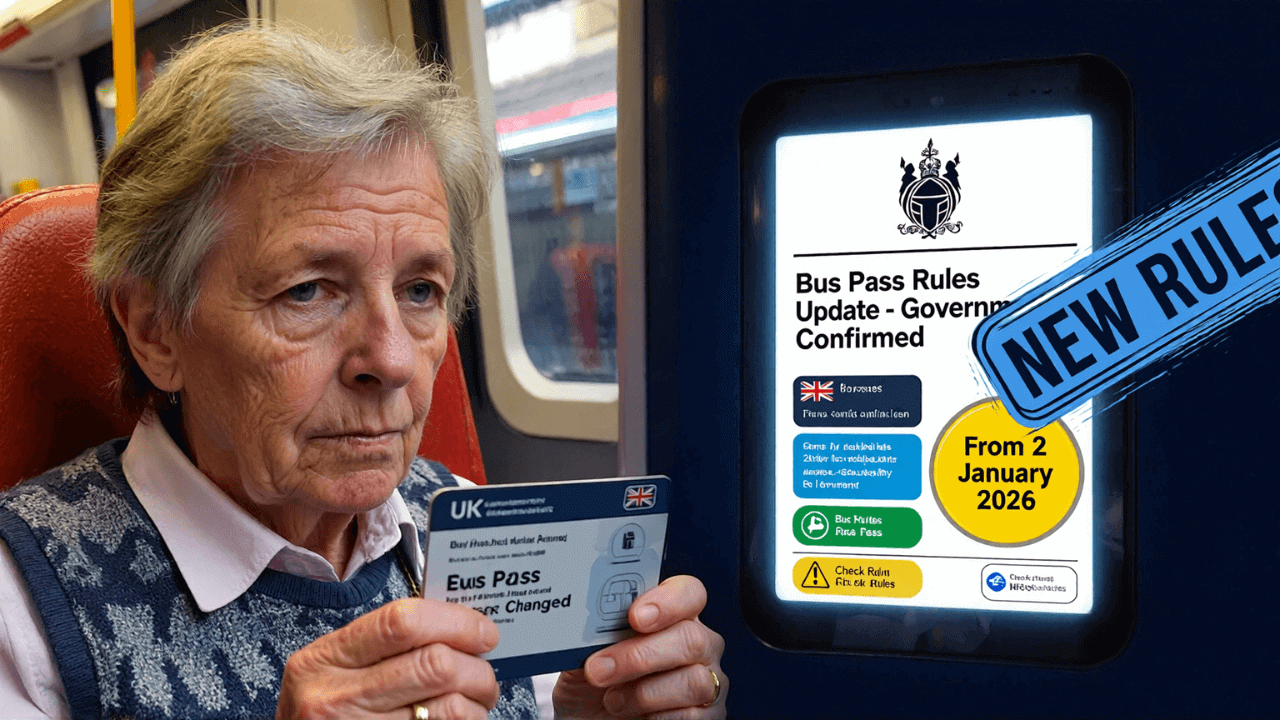
The UK Government has officially confirmed that new bus pass rules will come into force from 2 January 2026, affecting millions of older and eligible residents across England. The update is designed to modernise the concessionary travel system, tighten eligibility checks, and make sure support reaches the people who genuinely rely on it most.
For many pensioners and low-income residents, the bus pass is not just a travel perk — it is a lifeline. With the cost of living still high, any change to free or discounted travel naturally raises questions. This guide explains what is changing, who is affected, and what current bus pass holders should do next, using clear, practical language for UK readers.
What Is the UK Bus Pass Scheme
The English National Concessionary Travel Scheme allows eligible residents to travel free on local buses during off-peak hours. In most areas, this means free travel from 9:30am to 11pm on weekdays, and all day on weekends and bank holidays.
The scheme is funded by central government but administered by local councils. This means the core rules are national, while some extra benefits depend on where you live.
Why Bus Pass Rules Are Changing in 2026
According to UK Government, the January 2026 update aims to address three main issues:
• Rising costs of running concessionary travel
• Outdated eligibility verification systems
• Misuse and unreported changes in personal circumstances
Officials say the changes are about fairness and sustainability, not removing support. The goal is to protect the scheme long-term while ensuring public money is used correctly.
When the New Rules Start
The confirmed start date is:
2 January 2026
From this date, councils will begin applying the updated rules to new applications, renewals, and some existing pass holders.
Who Will Be Affected by the Changes
Not everyone will notice an immediate difference. The impact depends on your situation.
You may be affected if you:
• Are applying for a bus pass for the first time in 2026
• Are due to renew your pass next year
• Have recently changed address, income, or immigration status
• Hold a pass based on disability or special circumstances
Most long-term, correctly registered pensioners should see little or no disruption, as long as their details are up to date.
Changes to Eligibility Checks
One of the biggest updates involves stronger eligibility verification.
From January 2026, councils will:
• Cross-check age and residency more frequently
• Require updated proof for disability-based passes
• Confirm continued UK residency for pass holders
This does not mean re-applying every year, but it does mean records must be accurate.
State Pension Age and Bus Pass Access
In England, bus pass eligibility remains linked to State Pension age, not a fixed number.
If you reach State Pension age on or after 2 January 2026:
• You will still qualify
• You may be asked for clearer proof of age
• Processing times may be slightly longer
Applicants are encouraged to apply as soon as they reach eligibility, rather than waiting.
New Digital Checks and Renewals
Another confirmed change is the wider use of digital verification systems.
Councils will increasingly rely on:
• Online applications
• Digital identity confirmation
• Automated renewal reminders
Paper applications will still be available, but online routes may be faster and easier for most people.
What Existing Bus Pass Holders Need to Do
If you already have a valid bus pass, there is no need to panic.
However, you should:
• Check that your council has your current address
• Respond to any renewal or verification letters
• Keep proof of age or eligibility available
Ignoring requests for updated information could result in temporary suspension until details are confirmed.
Will Free Bus Travel Times Change
The core off-peak travel times are not expected to change nationally in January 2026.
That means:
• Free travel still begins at 9:30am on weekdays
• All-day free travel on weekends continues
However, some councils may review local extensions, such as early-morning travel, depending on budgets.
Regional Differences Still Apply
It is important to remember that:
• England operates one national scheme
• Scotland, Wales, and Northern Ireland have separate rules
The January 2026 changes apply only to England. Residents elsewhere should check their devolved government guidance.
What Happens If You Do Not Respond to a Council Request
Under the updated rules, councils will be stricter if they do not hear back from you.
Possible outcomes include:
• Temporary suspension of the pass
• Request for re-application
• Delay in replacement passes
This is why it is vital to open letters and emails from your local authority.
Lost or Stolen Bus Passes in 2026
The replacement process remains largely the same, but digital reporting will be encouraged.
You will usually need:
• Proof of identity
• Proof of address
• A small replacement fee in some areas
Reporting losses quickly helps prevent misuse.
How the Changes Affect Disabled Bus Pass Holders
For those with disability-based passes, councils may request updated medical or entitlement evidence, especially if the original award was made many years ago.
This is not automatic removal, but a review process to confirm ongoing eligibility.
Why These Changes Matter for Pensioners
For many older people, free bus travel supports:
• Independence
• Access to GP appointments
• Social connection
• Reduced living costs
The government says the 2026 update is about protecting these benefits, not cutting them.
What to Do Now to Avoid Problems
To stay on the safe side before January 2026:
• Check your local council website
• Make sure your contact details are correct
• Keep documents such as proof of age and address
Doing this now can prevent stress later.
Final Thoughts
The UK bus pass rule changes starting 2 January 2026 are mainly about administration, verification, and long-term sustainability. While the word “change” can sound worrying, most eligible residents will continue to enjoy free bus travel as before.
The key message is simple: keep your details up to date and respond to council communications.
By doing that, you can continue travelling with confidence in 2026 and beyond.